
In a world where global trade is increasingly shaped by tariffs, supply chain disruptions, and shifting economic priorities, businesses in the electronics sector are rethinking their strategies. For many, the answer lies in localizing their supply chains—bringing manufacturing, sourcing, and assembly closer to home. This is especially important in areas like consumer electronics supply chain management and adopting reliable electronics supply chain solutions.
This blog explores how to localize your electronics supply chain in India, especially if you’re heavily reliant on overseas outsourcing, the benefits of doing so, and what exactly should be localized to make the transition effective.
How to Localize Your Electronics Supply Chain
Localizing a supply chain isn’t about flipping a switch—it’s a deliberate, step-by-step process that requires careful planning. Here’s how you can approach it:
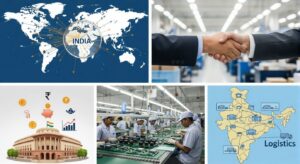
- Assess Your Current Supply Chain
Start by mapping out your existing supply chain. Identify every component, raw material, and process involved in your electronics manufacturing. Where are your suppliers located? Which parts are imported, and which are sourced locally? Understanding the full scope of your dependencies will help you pinpoint what can be localized and what might still need to come from abroad. For instance, are you importing printed circuit boards (PCBs) or semiconductors? Could these be sourced or manufactured in India instead? - Identify Local Suppliers and Partners
India’s electronics ecosystem is growing rapidly, with suppliers for components like capacitors, resistors, PCBs, and even battery packs emerging across states like Tamil Nadu, Karnataka, and Uttar Pradesh. Research and connect with local manufacturers through industry associations like the India Electronics and Semiconductor Association (IESA) or events like Electronica India. Building relationships with reliable suppliers is critical—visit their facilities, evaluate their quality standards, and negotiate long-term contracts to ensure stability. Collaborating with top electronics companies in India can also help accelerate localization. - Leverage Government Incentives
The Indian government is pushing hard to make the country a global electronics manufacturing hub. Schemes like the Production Linked Incentive (PLI) for electronics and the Scheme for Promotion of Manufacturing of Electronic Components and Semiconductors (SPECS) offer financial support for setting up or expanding manufacturing units. Explore these programs to offset initial costs, whether you’re building a new facility or upgrading an existing one. - Invest in Local Manufacturing Facilities
If you’re serious about localization, consider setting up your own assembly or manufacturing unit in India. This doesn’t mean starting from scratch—partnering with an existing contract manufacturer can be a faster way to get started. Focus on assembling high-value products locally to cut import costs and improve responsiveness to market demand. - Streamline Logistics and Distribution
Localizing doesn’t end with manufacturing—you need an efficient logistics network to move components and finished goods. Work with local logistics providers who understand regional challenges, like customs clearance or last-mile delivery, to keep your supply chain nimble.
Localizing When You’re Outsourcing Overseas
If your consumer electronics supply chain leans heavily on overseas outsourcing—say, from China, Taiwan, or Vietnam—shifting to India can feel daunting. Here’s how to make the transition:
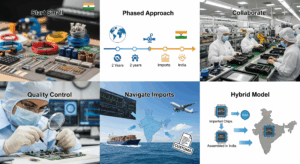
- Start Small with Component Sourcing
You don’t need to localize everything at once. Begin by sourcing simpler components, like connectors, casings, or cables, from Indian suppliers. These are often easier to find locally and can help you test the waters while maintaining quality. Gradually expand to more complex parts like displays or chipsets as you build confidence in local capabilities. - Phase Out Overseas Dependencies Gradually
Create a roadmap to reduce reliance on foreign suppliers over, say, two to three years. Simultaneously, maintain backup overseas suppliers to avoid disruptions during the transition. This phased approach minimizes risk while you establish local partnerships. - Collaborate with Contract Manufacturers
Setting up your own factory might not be feasible right away, especially if you’re used to outsourcing. India has a growing number of contract manufacturers, like Karkhana.io, that can handle everything from PCB assembly to final product integration. Partnering with them lets you localize production without heavy upfront investment. - Address Quality Concerns Head-On
A common worry when moving away from established overseas suppliers is quality. Indian manufacturers are improving, but you’ll need to enforce strict quality control. Invest in testing equipment, hire experienced quality assurance staff, and set clear benchmarks for suppliers. Regular audits and certifications (like ISO 9001) can help align local output with global standards. - Navigate Import Challenges
While localizing, you may still need to import certain high-tech components, like advanced semiconductors, that India doesn’t yet produce in large volumes. Work with customs consultants to optimize duties and take advantage of free trade agreements or duty drawback schemes. Over time, explore substitutes or advocate for local production through industry forums. - Build a Hybrid Model
Localization doesn’t mean cutting off all overseas ties. A hybrid model—where critical, high-tech components come from abroad and assembly or less complex parts are handled in India—can balance cost, quality, and speed. For instance, import microchips but assemble devices locally to save on tariffs and shipping.
Benefits of Localizing in India
Shifting your supply chain to India isn’t just a reaction to global tariffs—it’s a strategic move with long-term advantages. Here’s why it makes sense:
- Cost Savings on Tariffs and Logistics
High tariffs on electronics imports can eat into margins. Localizing production in India eliminates or reduces these costs. Plus, shorter supply chains mean lower shipping expenses and faster delivery, which is a win for both you and your customers. - Access to a Growing Market
India is one of the world’s largest and fastest-growing electronics markets, with demand for smartphones, consumer appliances, and automotive electronics soaring. Manufacturing locally positions you to serve this market directly, respond to trends faster, and customize products for Indian consumers. For this reason, global players and top electronics companies in India are increasingly strengthening their presence here. - Resilience Against Global Disruptions
Relying on overseas suppliers leaves you vulnerable to geopolitical tensions, shipping delays, or sudden policy changes. A localized supply chain in India insulates you from these risks, ensuring continuity even when global trade hits rough waters. - Skilled and Cost-Effective Workforce
India offers a unique combination of skilled labor and competitive wages. Engineers, technicians, and factory workers are available at a fraction of the cost compared to many developed countries, without compromising on capability. - Government Support and Infrastructure
From tax breaks to subsidized land in industrial corridors, India’s government is rolling out the red carpet for electronics manufacturers. Add to that improving infrastructure—like dedicated freight corridors and 5G connectivity—and you’ve got a solid foundation for scaling operations. - Brand Appeal
Products labelled “Made in India” carry growing appeal, both domestically and globally. Local manufacturing can enhance your brand’s reputation, signalling commitment to the market and alignment with national priorities.
What Should Be Localized in India?
Not everything in your supply chain needs to—or can—be localized immediately. Focus on these key areas to maximize impact:
- Component Sourcing
Start with widely available components like resistors, capacitors, connectors, and casings. India has a robust ecosystem for these, with manufacturers in hubs like Bengaluru and Noida. Over time, explore PCBs, displays, and battery packs as local capacity grows. - Assembly and Testing
Final assembly is a great candidate for localization. It’s labor-intensive, reduces import duties on finished goods, and lets you customize products for local needs. Set up testing labs to ensure quality before products hit the market. - Packaging and Accessories
Packaging materials, chargers, cables, and user manuals can easily be sourced or produced in India. This cuts costs and aligns with sustainability goals by reducing shipping-related emissions. - Logistics and Warehousing
Build a local logistics network to handle component delivery and product distribution. Set up regional warehouses in cities like Delhi, Mumbai, or Chennai to streamline inventory and reduce lead times. - After-Sales Support
Localize repair centers and customer service to build trust and reduce turnaround times. Partner with local service providers or train your own teams to handle warranty claims and technical support.
Final Thoughts
Localizing your consumer electronics supply chain in India is more than a hedge against global tariffs—it’s a chance to build a stronger, more responsive business. By starting small, leveraging local suppliers, and tapping into India’s incentives and talent, you can gradually shift away from overseas outsourcing without sacrificing quality or efficiency. The benefits—cost savings, market access, and resilience—are clear, but the real reward is positioning your company to thrive in one of the world’s most dynamic markets.
To make this transition smoother, consider partnering with experts who understand the nuances of India’s electronics manufacturing landscape. Karkhana.io, offers flexible and scalable turnkey electronics supply chain solutions that can simplify your localization journey. With a 100,000 sq. ft. facility, 7 SMT lines, 5 through-hole lines, and advanced capabilities like 3D AOI, X-ray inspection, and conformal coating, Karkhana.io handles everything from component sourcing to final box build. Whether you’re assembling HDI PCBs or integrating complex systems for automotive or consumer electronics, their end-to-end services—backed by real-time quality control—can help you localize effectively and scale with confidence.
Frequently Asked Questions :
Q1. What is consumer electronics supply chain management and why is it important?
Consumer electronics supply chain management involves overseeing the sourcing, manufacturing, assembly, and delivery of electronic products. Efficient management ensures cost savings, faster delivery, and resilience against global disruptions.
Q2. How can electronics supply chain solutions help businesses localize in India?
Electronics supply chain solutions streamline sourcing, manufacturing, and logistics. They enable companies to leverage local suppliers, reduce import dependency, and scale efficiently in India’s growing electronics market.
Q3. What are the key steps to localize a consumer electronics supply chain?
Start by assessing current suppliers, identify local partners, invest in assembly facilities, and optimize logistics. Gradually phase out overseas dependencies while maintaining quality control.
Q4. Why are top electronics companies in India investing in local manufacturing?
Top electronics companies in India invest locally to reduce tariffs, improve responsiveness to market demand, access skilled labour, and strengthen brand appeal through “Made in India” products.
Q5. Can a hybrid consumer electronics supply chain balance local and overseas sourcing?
Yes, a hybrid supply chain combines local assembly and component sourcing with selective imports for high-tech parts, optimizing cost, quality, and speed while mitigating risks.